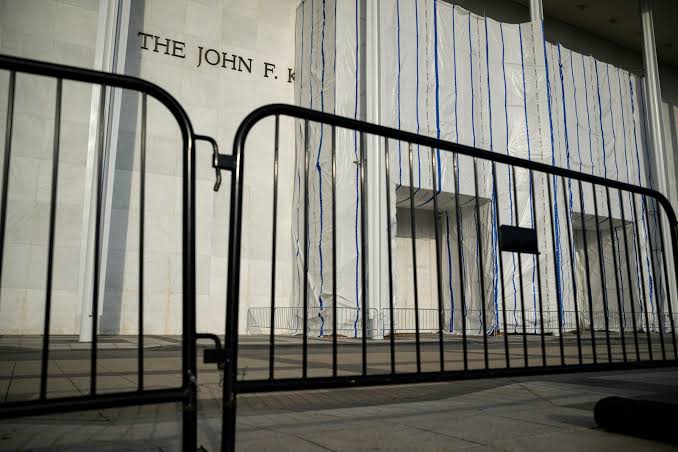
Sen. Mike Lee of Utah blocked an attempt to quickly advance a bipartisan Senate bill that would require congressional approval before the John F. Kennedy Center for the Performing Arts or other congressionally designated presidential memorials could be demolished.
The dispute unfolded in the Senate on September 28, 2026, after Sen. Jeff Merkley of Oregon sought unanimous consent to move the Protecting Presidential Memorials Act forward. Republican Sen. Lisa Murkowski of Alaska was also a sponsor of the Senate legislation. Lee objected, preventing the bill from advancing through that expedited procedure.
The development is part of a larger legal and political dispute over the future of the Kennedy Center in Washington, D.C. The performing arts complex has faced questions over renovations, its leadership, its name and whether demolition could become part of a future rebuilding plan.
Latest Update: September 29, 2026
As of September 29, 2026, the Senate bill has not become law. Lee’s objection stopped the unanimous-consent request, but it did not permanently prevent lawmakers from pursuing the legislation through the regular legislative process. A separate version was introduced in the House on September 29 by Rep. Chellie Pingree of Maine, while Merkley and Murkowski continued to back the Senate effort.
Lee told Forbes that Democrats should instead focus on issues including the cost of living and election legislation rather than moving the Kennedy Center measure through unanimous consent. His objection therefore concerned the procedure and substance of the legislation rather than constituting a final Senate vote rejecting the bill through the normal legislative process.
What Bill Did Mike Lee Block?
The legislation is known as the Protecting Presidential Memorials Act. The Senate version was developed by Merkley and Murkowski and would prohibit demolition of national memorials honoring U.S. presidents when those memorials were designated by Congress unless Congress explicitly authorized the demolition.
The Kennedy Center is the most immediate focus because Congress designated the building as a national memorial to President John F. Kennedy. The proposed legislation would therefore establish a congressional approval requirement before the building could be demolished.
The bill was broader than the Kennedy Center alone. Its proposed protection would also apply to other presidential memorials that meet the legislation’s definition. The measure was presented by its sponsors as a way to ensure that Congress, rather than an administration or memorial governing body acting alone, would have a formal role in deciding whether such a memorial could be demolished.
How Did Mike Lee Stop the Bill?
Merkley attempted to advance the measure using unanimous consent. This Senate procedure is designed to allow certain matters to move quickly without the full debate and voting process normally associated with legislation.
The key feature of unanimous consent is that a single senator can object. Once Lee objected, the Senate could not move the bill forward under that particular procedure. The objection did not amount to a recorded roll-call vote in which senators were individually listed as voting for or against the legislation.
This distinction is important when describing the event. Saying that Lee “blocked” the bill accurately describes what happened to the unanimous-consent request, but the action did not itself permanently kill the legislation. Supporters can still seek consideration through other Senate procedures.
Who Sponsored the Senate Bill?
Jeff Merkley
Democratic Sen. Jeff Merkley of Oregon was a leading sponsor of the Senate effort. Merkley’s office said the legislation was intended to prevent the demolition of congressionally authorized presidential memorials without an act of Congress.
Merkley sought unanimous consent for the measure on September 28. After Lee objected, Merkley criticized the decision and argued that Congress should have a role in determining the future of memorials it has authorized.
Lisa Murkowski
Republican Sen. Lisa Murkowski of Alaska also supported the Senate bill. Murkowski is significant to the Kennedy Center debate because she and Merkley are involved with the Senate subcommittee responsible for funding oversight related to the center and other areas under the Interior-Environment appropriations jurisdiction.
Before the Senate action, Murkowski said lawmakers had authorized and funded substantial renovation work at the Kennedy Center but had not authorized demolition of the facility.
Why Is the Kennedy Center Facing a Demolition Debate?
The current dispute follows a series of disagreements involving President Donald Trump, the Kennedy Center board, renovations and the building’s name.
Trump returned to the Kennedy Center’s leadership structure during his second presidential term and has publicly argued that the center needs major changes. He has also discussed the possibility that the building could eventually be demolished if the planned renovation effort does not proceed under conditions he supports.
The administration’s position has been tied in part to concerns about the condition and finances of the facility. In court filings, Justice Department lawyers representing the Kennedy Center raised the possibility that continued deterioration could eventually require the building to be taken down. They also discussed an outdoor amphitheater as a possible replacement, while acknowledging that such a replacement would not adequately honor President Kennedy in the same way.
At the same time, Kennedy Center leadership has told the court that the building will not be demolished. That means the reported possibility of demolition and the center’s stated position have not been the same.
Trump and the Kennedy Center Name Dispute
The demolition controversy is connected to an earlier dispute over whether President Trump’s name could be added to the Kennedy Center.
The Trump-aligned board voted to rename the venue the “Trump-Kennedy Center.” That move was challenged in federal court because the Kennedy Center was established by Congress as a memorial to John F. Kennedy.
In May 2026, federal Judge Christopher Cooper ruled that the board could not unilaterally rename the institution. In September, Cooper also blocked an effort to place Trump’s name on the building or grounds in another form. The judge said the Kennedy Center could not install memorials honoring Trump or others without congressional approval.
That legal history helps explain why the Protecting Presidential Memorials Act focuses on congressional authority. Supporters of the legislation argue that Congress should have to authorize the destruction of a memorial that Congress itself created or designated.
What Did Mike Lee Say About the Bill?
Lee objected to the unanimous-consent request rather than allowing the measure to advance without a recorded vote. His position, as reported after the Senate action, was that Democrats should concentrate on other legislative priorities instead of using Senate time for what he characterized as partisan political messaging surrounding the Kennedy Center.
Lee has also been a prominent supporter of other parts of the Trump administration’s legislative agenda. However, his objection to this particular bill should be understood on its own terms: the immediate Senate action concerned whether the memorial-protection legislation could advance by unanimous consent.
What Did Merkley and Murkowski Say?
Merkley’s office said the bill was intended to protect congressionally authorized memorials and prevent their demolition without congressional authorization. After Lee objected, Merkley said the Senate had been prevented from advancing the bipartisan measure through the expedited process.
Murkowski had previously argued that Congress had authorized significant renovation work at the Kennedy Center but had not authorized demolition. Her comments reflected the broader question at the center of the legislation: whether decisions involving a federally recognized presidential memorial should require direct congressional involvement.
What Happens to the Bill Now?
Lee’s objection means the bill did not advance through unanimous consent. It does not, however, mean that the legislation can never receive consideration.
Congress has other procedures available for considering legislation. Supporters could seek a committee process, floor consideration under the Senate’s regular rules or another legislative route. The House also now has its own version of the proposal.
Whether the measure eventually receives a vote, passes both chambers and becomes law remains unresolved as of September 29, 2026. Any future action would depend on the legislative process and the positions taken by members of both chambers.
What Is Happening at the Kennedy Center Right Now?
The Kennedy Center has also been dealing with a temporary closure and questions about the condition of the building. The center’s leadership has described deterioration and emergency repairs as reasons for the closure, while the dispute over the longer-term renovation plan continues in federal court.
A federal judge has ordered Kennedy Center officials to provide at least 30 days’ notice before any demolition plans. That court requirement does not itself authorize demolition; rather, it creates a notice requirement within the ongoing litigation.
The legal case and the congressional legislation are separate developments. The Senate bill seeks to establish a statutory requirement for congressional authorization, while the court proceedings concern the actions already being challenged before the federal judiciary.
Quick Facts About the Mike Lee Kennedy Center Bill
| Issue | Details |
|---|---|
| Senator who objected | Mike Lee, Republican of Utah |
| Senators sponsoring the Senate bill | Jeff Merkley, Democrat of Oregon, and Lisa Murkowski, Republican of Alaska |
| Bill | Protecting Presidential Memorials Act |
| Key institution | John F. Kennedy Center for the Performing Arts |
| Senate procedure | Unanimous consent |
| What Lee’s objection did | Prevented the bill from advancing through unanimous consent |
| Did the objection permanently kill the bill? | No. Other legislative procedures remain available. |
| House action | A House version was introduced September 29, 2026. |
| Current legal status | The Kennedy Center remains subject to ongoing federal litigation concerning its governance, name and future. |
Reader Questions
Did Mike Lee block the Kennedy Center bill?
Yes. Sen. Mike Lee objected when Sen. Jeff Merkley sought unanimous consent to advance the Protecting Presidential Memorials Act in the Senate. His objection prevented the bill from moving forward through that expedited procedure.
What was the Kennedy Center bill about?
The Protecting Presidential Memorials Act would require Congress to authorize the demolition of congressionally designated presidential memorials. The Kennedy Center is the principal focus because Congress established it as a national memorial to President John F. Kennedy.
Did Mike Lee vote against the Kennedy Center?
Lee objected to a unanimous-consent request to advance the bill. That procedure is different from a conventional recorded Senate roll-call vote on final passage.
Can the Kennedy Center still be demolished?
The future of the building remains subject to legal and legislative developments. A federal judge has required 30 days’ notice before demolition plans, while Kennedy Center leadership has told the court that the building will not be demolished.
Who introduced the Kennedy Center protection bill?
The Senate version was introduced by Democratic Sen. Jeff Merkley of Oregon and Republican Sen. Lisa Murkowski of Alaska. A House version was introduced on September 29 by Rep. Chellie Pingree of Maine.
Why does Congress have a role in the Kennedy Center?
The Kennedy Center was authorized by Congress as a living memorial to President John F. Kennedy. The current legislation argues that major action such as demolition should therefore require congressional authorization rather than being decided solely by the center’s governing body or the executive branch.
Did the Senate bill become law?
No. As of September 29, 2026, the bill had not passed Congress or become law. Lee’s objection prevented it from advancing through unanimous consent, while supporters could still pursue other legislative avenues.
What is the latest Kennedy Center controversy?
The current controversy involves the building’s future, including renovation plans, its name, its temporary closure and discussion of possible demolition. Those issues are being addressed through both congressional activity and federal court proceedings.
Wrap-Up
Sen. Mike Lee’s September 28 objection stopped a bipartisan Kennedy Center protection bill from advancing through unanimous consent in the Senate. The legislation, sponsored by Merkley and Murkowski, would require Congress to approve the demolition of congressionally designated presidential memorials, including the Kennedy Center.
The distinction between blocking the procedure and defeating the legislation is important. Lee’s objection prevented the bill from moving under unanimous consent, but lawmakers can still use other legislative procedures to consider it. A House version was also introduced on September 29, keeping the issue active in Congress.
The Kennedy Center’s future remains tied to a separate federal court dispute involving its governance, name, renovations and possible demolition. For now, there is no new law authorizing demolition, and the court has required advance notice of any demolition plans.
Disclaimer
This article summarizes publicly reported congressional and court developments available as of September 29, 2026. Political positions and statements are attributed to the people or institutions that made them. The Protecting Presidential Memorials Act had not become law as of the publication date, and future congressional or court action could change the situation.
