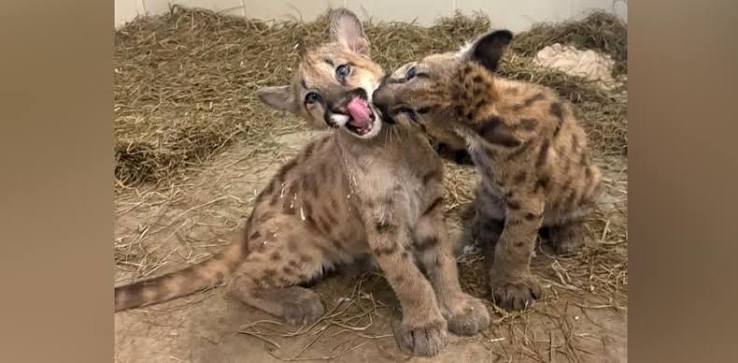
Wildwood Park & Zoo in Marshfield, Wisconsin, has welcomed two new cougar cubs, giving visitors a new generation of animals to look forward to seeing at the popular city zoo.
The new arrivals are an unrelated male and female, both approximately three months old. They came to Wildwood last week from a Wisconsin captive-breeding facility and are currently adjusting to their new surroundings under the care of zoo staff.
Although the cubs are not ready for visitors yet, zoo officials say both are eating well, interacting with enrichment items and becoming increasingly comfortable in their new environment.
Latest Update: October 1, 2026
As of October 1, 2026, the two cougar cubs are still acclimating and have not yet made their public debut.
Wildwood Park & Zoo staff are gradually introducing the young animals to new sights, sounds and caretakers. The zoo plans to move them into their outdoor habitat once they are ready.
The Welcome Center has been temporarily closed while the cubs settle into their new home. Officials are asking the public to be patient during this early adjustment period.
The zoo also plans to launch a community naming contest for the two cubs. Their public names have not yet been announced.
Two New Cougar Cubs Arrive in Marshfield
The new arrivals consist of one male and one female cougar. The two animals are not related and are both around three months old.
They arrived from a captive-breeding facility in Wisconsin. Because they were born and raised under human care, they are being introduced to their new surroundings carefully rather than immediately being placed on public display.
Animal-care staff are monitoring their behavior, eating habits and response to the new environment. According to zoo officials, both cubs are eating well and engaging with enrichment items.
Enrichment gives animals opportunities to explore, interact with objects and express natural behaviors while living under professional care. For young animals, it can also help them become comfortable with unfamiliar surroundings.
Why Visitors Cannot See Them Yet
The zoo’s decision to delay the public debut is intended to give the cubs time to settle in without unnecessary stress.
Moving to a new facility means encountering unfamiliar smells, sounds, spaces, people and routines. Staff are therefore introducing those elements gradually.
The cubs will eventually be allowed to explore their outdoor habitat, but zoo officials have not announced a specific public debut date.
Visitor reminder: Even after the cubs enter the public exhibit, visitors may not see them immediately. Zoo officials say the animals will be able to choose whether to spend time outdoors, indoors or in less visible parts of their habitat.
Wildwood’s Welcome Center Temporarily Closed
As the cubs adjust to their new surroundings, Wildwood Park & Zoo’s Welcome Center has temporarily closed.
The temporary closure is part of the zoo’s effort to provide the young animals with a quieter environment during their transition.
Staff will continue working with the cubs before introducing them to additional sights, sounds and people. Once the animals are comfortable enough to explore their outdoor habitat, visitors will have a chance to see them.
A New Chapter After Star and Thunder
The arrival of the two cubs represents a new chapter in Wildwood’s long history of caring for cougars.
Longtime visitors may remember Star and Thunder, a brother-and-sister pair that arrived at Wildwood in 2008. They became familiar faces at the zoo and remained there for many years.
Their cougar exhibit was expanded in 2019, providing additional space, natural surfaces and more opportunities for enrichment and public viewing.
Thunder died in February 2024 at nearly 16 years old. Star died in April 2026 at age 17, only months before she would have reached 18.
The two animals became favorites among generations of visitors. Their departure left the cougar exhibit without its longtime residents, making the arrival of the new cubs an important moment for the zoo and its community.
The young male and female now have an opportunity to become the next generation of cougar ambassadors at Wildwood.
Why the Cubs Will Remain in Human Care
The new cougars were born under human care and are not candidates for release into the wild.
Young cougars normally learn important survival skills from their mothers. Those skills include hunting, navigating large territories, recognizing threats and avoiding people.
A captive-born animal that has not learned those behaviors cannot simply be released into the wild and expected to survive. Releasing such an animal could also create safety concerns for people and wildlife.
Wildwood provides the cubs with permanent professional care, including appropriate food, shelter, veterinary attention and enrichment.
The animals can also serve as ambassadors for their species by giving visitors an opportunity to learn about cougar biology, habitat, predator-prey relationships and wildlife conservation.
Cougars and Wisconsin
Cougars are native to Wisconsin, although the species disappeared from the state as a breeding population around the beginning of the 20th century.
Wisconsin continues to receive occasional confirmed cougar sightings. The Wisconsin Department of Natural Resources has said there is currently no evidence of an established breeding population in the state.
Many confirmed animals in Wisconsin are believed to be transient cougars moving through the state, particularly males dispersing from populations farther west.
That does not mean cougars are completely absent from the region. Wildlife officials continue to document individual animals, while evidence of reproduction has also emerged elsewhere in the Upper Midwest.
Cougars Are Appearing Elsewhere in the Upper Midwest
Recent wildlife observations have attracted attention because of evidence of cougar reproduction in parts of the Upper Midwest.
In Michigan’s Upper Peninsula, two cougar kittens were photographed in 2025. The observation provided the first verified evidence of cougar reproduction in Michigan in more than a century.
In spring 2026, trail cameras in northern Minnesota documented a female cougar with three kittens. Wildlife officials described that as the first confirmed evidence of wild cougar reproduction in Minnesota in more than 100 years, while cautioning that the discovery did not establish a self-sustaining breeding population.
Wisconsin has continued to document individual cougar activity. A cougar photographed by a trail camera in southern Lincoln County on August 12, 2026, was among the state’s recent confirmed sightings.
How Big Do Cougars Get?
Cougars are among the largest cats native to North America.
Adult males can weigh roughly 116 to 160 pounds, while females generally weigh about 75 to 110 pounds, according to information cited from the Wisconsin DNR in local reporting.
An adult cougar can measure more than seven feet from its nose to the end of its tail.
The cubs at Wildwood are obviously much smaller than adults. At roughly three months old, they are still at an early stage of their development.
What Do Cougar Cubs Look Like?
Young cougars have a noticeably different appearance from adults. Cougar cubs are born with spots that help provide camouflage.
As they grow, those markings gradually fade. Adult cougars are generally recognized by their tawny coats and long tails.
Visitors who eventually see Wildwood’s cubs will therefore be watching the animals during an important stage of their physical development.
Cougar Behavior
Cougars are generally solitary and secretive animals.
In the wild, they are ambush predators and white-tailed deer are an important part of their natural diet. They typically occupy large territories and tend to avoid people.
Despite their common nickname of mountain lions, cougars are not the same animal as African lions and do not roar like lions.
Cougars communicate through a variety of sounds, including purrs, chirps, growls, hisses and high-pitched calls.
What Visitors Can Expect
When the cubs eventually enter their public exhibit, zoo officials are asking visitors to approach quietly.
The request is intended to help the animals become comfortable with the sights and sounds of visitors. Young animals may need time to adjust to crowds and unfamiliar noises.
Visitors should also understand that seeing the cubs is not guaranteed on every visit. The animals will be able to move between different areas of their habitat, including spaces that may not be visible from the public viewing areas.
Their ability to choose where they spend time is part of providing them with appropriate animal care.
Community Naming Contest Planned
One of the most anticipated parts of the cubs’ arrival will be choosing their names.
Wildwood Park & Zoo plans to announce a community naming contest in the coming weeks. The cubs do not yet have public names.
The contest will give local residents and visitors an opportunity to participate in welcoming the new animals to Marshfield.
Details about how the contest will work are expected to be announced by the zoo and the City of Marshfield Parks and Recreation Department.
About Wildwood Park & Zoo
Wildwood Park & Zoo is operated by the City of Marshfield Parks and Recreation Department.
The zoo provides visitors with opportunities to see animals while learning about wildlife, conservation and responsible relationships between people and nature.
Admission to Wildwood Park & Zoo is free. Donations help support animal care, exhibits and educational programming.
The arrival of the two cougar cubs gives the zoo another opportunity to connect visitors with wildlife while continuing the legacy established by Star and Thunder.
Quick Facts
| Detail | Information |
|---|---|
| Zoo | Wildwood Park & Zoo |
| Location | Marshfield, Wisconsin |
| New Animals | Two cougar cubs |
| Sex | One male and one female |
| Relationship | Unrelated |
| Age | Approximately three months |
| Origin | Wisconsin captive-breeding facility |
| Current Status | Acclimating under professional care |
| Diet/Health Update | Both reported to be eating well |
| Enrichment | Both are interacting with enrichment items |
| Public Debut | Not yet announced |
| Names | Not yet selected |
| Naming Contest | Planned for the coming weeks |
| Previous Cougar Residents | Star and Thunder |
| Admission | Free |
Reader Questions
Did Wildwood Park & Zoo get two new cougar cubs?
Yes. Wildwood Park & Zoo in Marshfield has welcomed two unrelated cougar cubs, one male and one female. Both are approximately three months old.
Where did the Wildwood cougar cubs come from?
The cubs arrived from a Wisconsin captive-breeding facility. They are now settling into their new home at Wildwood Park & Zoo.
How old are the Wildwood cougar cubs?
Both cubs are approximately three months old. They are still young enough to rely heavily on zoo animal-care staff as they adjust to their new surroundings.
Can I see the cougar cubs at Wildwood Park & Zoo now?
Not yet. The cubs are still acclimating, and zoo officials have not announced their public debut date.
Why can’t visitors see the cougar cubs yet?
Zoo staff are giving the cubs a quiet environment while gradually introducing them to new sights, sounds and caretakers. The outdoor habitat will be opened to them once staff determine they are ready.
Will the cougar cubs be released into the wild?
No. The cubs were born under human care and are not candidates for release. They will remain at Wildwood under professional animal care.
What happened to Star and Thunder?
Star and Thunder were a brother-and-sister cougar pair that arrived at Wildwood in 2008. Thunder died in February 2024 at nearly 16, while Star died in April 2026 at age 17.
Will the new cougar cubs get names?
Yes. Wildwood Park & Zoo plans to hold a community naming contest. Details are expected to be announced in the coming weeks.
Are the two cougar cubs related?
No. The male and female are unrelated.
What do cougar cubs look like?
Young cougars typically have spots that help provide camouflage. Those markings gradually fade as the animals mature.
Are cougars native to Wisconsin?
Yes. Cougars are native to Wisconsin, although they disappeared from the state as a breeding population around 1910. Individual cougars are still occasionally documented in Wisconsin.
Does Wisconsin have a cougar breeding population?
The Wisconsin DNR has said there is no evidence of an established breeding population in Wisconsin. Confirmed sightings continue to occur, however.
Are cougars dangerous to people?
Cougars are large wild predators but are generally secretive and avoid people. Wild animals should always be observed from a safe distance and according to wildlife officials’ guidance.
How big can adult cougars become?
Adult males can weigh roughly 116 to 160 pounds, while adult females generally weigh about 75 to 110 pounds. Adults can measure more than seven feet from nose to the end of the tail.
Is Wildwood Park & Zoo free?
Yes. Admission to Wildwood Park & Zoo is free. Donations help support animal care, exhibits and educational programs.
Wrap-Up
The arrival of two young cougar cubs marks a new chapter for Wildwood Park & Zoo in Marshfield. The unrelated male and female, both around three months old, have arrived from a Wisconsin captive-breeding facility and are now beginning the gradual process of adapting to their new home.
Visitors will have to wait before seeing them in the public exhibit. Zoo staff are prioritizing the cubs’ adjustment and will gradually introduce them to new sights, sounds and people before giving them access to the outdoor habitat.
The cubs also carry forward a long Wildwood tradition. Star and Thunder became familiar faces for visitors after arriving in 2008, and their deaths in 2024 and 2026 marked the end of an era at the zoo. The new cubs now have the opportunity to become the next cougar ambassadors for Marshfield.
For visitors, the next major milestone will be the public debut and community naming contest. Until then, the zoo is asking everyone to give its newest residents the time and quiet they need to settle in.
Disclaimer: This article is based on September 28–29, 2026 reporting from WSAW and Marshfield-area sources citing the City of Marshfield and Wildwood Park & Zoo. Public-debut timing and naming-contest details may change as the animals continue to acclimate.
