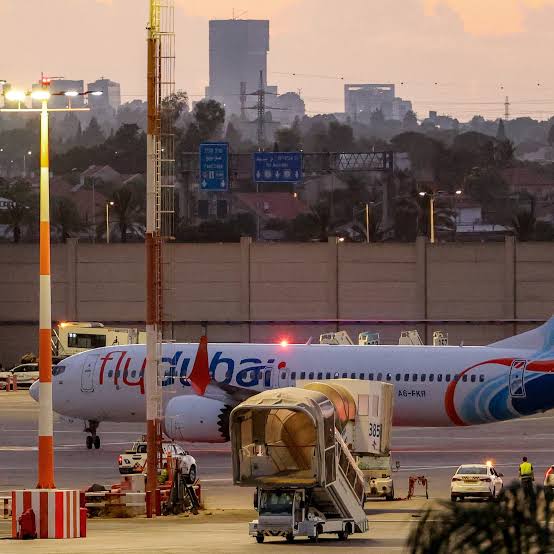
The identity and background of the Flydubai co-pilot accused of attacking the captain during a flight from Dubai to Tel Aviv have become the focus of an international investigation. Multiple reports have identified the man as Hamam al-Hammami, an Omani national, although Al Jazeera has emphasized that his identity and alleged extremist beliefs have not been officially confirmed publicly.
The incident happened aboard Flydubai Flight FZ1073 on September 30, 2026. The aircraft experienced a dramatic in-flight emergency after the co-pilot allegedly attacked Captain Smit Machchhar inside the cockpit. The captain was injured but managed to open the cockpit door, allowing other people aboard the aircraft to intervene.
On October 3, UAE Federal Prosecutor Hamad Saif Al-Shamsi said investigators had determined that the co-pilot had attempted to carry out a terrorist attack. Authorities are continuing to investigate the motive, possible connections and other circumstances surrounding the incident.
Latest Update on the Flydubai Co-Pilot Investigation
As of October 3, 2026, investigators are examining both physical and digital evidence connected to Flight FZ1073. The UAE prosecutor general said the investigation is intended to establish the full circumstances and motives behind the incident and determine whether there were related connections or additional people involved.
Flydubai has also said that the circumstances surrounding the incident remain under investigation. Authorities have not publicly released a final account of the accused co-pilot’s motive or established whether he acted on behalf of an organization.
That distinction is important because several claims have emerged rapidly since the incident. Some concern alleged extremist material, previous employment issues and possible radicalization, but those claims should be attributed to the sources making them rather than presented as independently established facts.
Who Is Hamam al-Hammami?
Multiple media reports identify the accused co-pilot as Hamam al-Hammami, an Omani citizen. Al Jazeera reported that he was previously barred from flying in Oman amid concerns about alleged extremist views, citing reports based on unnamed sources.
The Associated Press likewise reported that al-Hammami had previously been flagged over extremism concerns and that authorities were examining how he came to work for Flydubai.
However, his identity has not been publicly confirmed in an official statement cited by Al Jazeera. This means readers should distinguish between the name reported by multiple media organizations and a formal government identification.
How Old Is Hamam al-Hammami?
Current media reports identify Hamam al-Hammami as 29 years old. However, a complete independently verified biographical profile, including his exact date of birth, has not been released publicly.
Because the investigation is ongoing, additional personal information should be treated cautiously unless released by authorities or confirmed through reliable documentation.
What Nationality Is the Flydubai Co-Pilot?
Reports identify the accused co-pilot as an Omani national.
His reported nationality became significant because Oman does not have formal diplomatic relations with Israel, the destination of Flight FZ1073. The incident subsequently prompted questions about how foreign-airline pilot screening works for flights entering Israel.
Al Jazeera reported that the co-pilot was reportedly born in the United Arab Emirates to an Omani father and Syrian mother. These details are part of media reporting rather than a comprehensive official biography.
What Was Hamam al-Hammami’s Aviation Background?
Reports indicate that al-Hammami had previous aviation experience before joining Flydubai.
He was reportedly associated with Oman Air during his training and career development. According to reports cited by major news organizations, concerns were raised about extremist material or views during his time in Oman, and he was subsequently prevented from flying there.
The precise circumstances of his departure from Oman Air and the extent to which any concerns were formally recorded remain part of the questions surrounding the investigation. Al Jazeera cited a Wall Street Journal report based on unnamed sources saying Omani authorities had barred him from flying because of concerns about alleged extremist views.
Those reports raise an important question for investigators: whether information about the previous concerns was available to Flydubai or other aviation authorities when he was later employed.
Was Hamam al-Hammami Previously Barred From Flying?
Multiple reports say yes. The reports claim that Omani authorities had previously prevented him from flying because of concerns related to alleged extremist views.
However, the precise official basis for that decision has not been fully disclosed publicly. It is therefore not appropriate to state as established fact that a particular extremist ideology or organization was responsible for the earlier action.
The Associated Press reported that investigators are examining whether previous warning signs existed and whether the airline’s vetting process should have identified them.
What Happened on Flydubai Flight FZ1073?
Flight FZ1073 departed Dubai for Tel Aviv on September 30, 2026. There were 182 people aboard, including passengers and crew, according to Associated Press reporting.
During the flight, the co-pilot allegedly attacked Captain Smit Machchhar in the cockpit. Initial reporting described a stabbing or assault; UAE authorities later said an emergency crash axe was used.
The UAE prosecutor general said the co-pilot attacked the captain and attempted to take control of the aircraft. The investigation has now formally characterized the episode as an attempted terrorist operation.
Who Was Captain Smit Machchhar?
Captain Smit Machchhar is an Indian national who was operating the Flydubai flight.
Despite suffering serious injuries during the cockpit attack, Machchhar managed to open the cockpit door. This allowed passengers and other crew members to enter and intervene.
The National reported on October 3 that Machchhar was recovering in the UAE and had received praise from Sheikh Hamdan bin Mohammed, Crown Prince of Dubai, who described his actions as courageous and focused on protecting human life.
Machchhar’s actions were also highlighted by international officials following the incident. His ability to regain access to the cockpit was an important part of how the aircraft avoided a catastrophic outcome.
How Was the Plane Saved?
After the cockpit confrontation, passengers and crew members intervened. The injured captain succeeded in opening the cockpit door, allowing people outside the flight deck to reach the attacker.
Two additional pilots who were traveling aboard the aircraft also became involved in the emergency response. They were described as off-duty or deadheading pilots who were traveling as passengers and were able to help operate the aircraft.
The aircraft eventually diverted to Tabuk, Saudi Arabia, where it landed safely. Reuters reported that the aircraft had undergone a dramatic descent during the incident before the emergency response stabilized the situation.
Why Did the Plane Make an Emergency Landing in Saudi Arabia?
Flight FZ1073 was originally traveling toward Tel Aviv, but the cockpit emergency forced the crew to seek a safe airport in the region.
The aircraft ultimately landed at Prince Sultan bin Abdulaziz International Airport in Tabuk, Saudi Arabia.
The diversion was necessary after the attack and the resulting injuries to the flight crew. The aircraft’s safe landing prevented the incident from developing into an aircraft crash.
Was the Flydubai Incident a Terrorist Attack?
The UAE government now officially describes the incident as an attempted terrorist operation.
UAE Federal Prosecutor Hamad Saif Al-Shamsi said the co-pilot had launched an attack during the flight, assaulted the captain with a crash axe and attempted to take control of the aircraft. He said investigators were still working to establish the full circumstances, motives and possible connections.
Earlier in the investigation, officials had been more cautious. On October 1, the UAE attorney general ordered an investigation into whether the incident involved terrorist activity, prior planning or outside direction.
The October 3 statement therefore represents an important development: the UAE has moved from investigating whether terrorism was involved to publicly characterizing the incident as an attempted terrorist operation.
Was Hamam al-Hammami Linked to a Terrorist Group?
No specific terrorist organization has been publicly established as responsible for the incident in the sources reviewed.
Media reports have described alleged extremist material and possible radicalization concerns involving the accused co-pilot. However, those reports do not establish that he was acting under the direction of a named terrorist organization.
The UAE prosecutor’s statement specifically said investigators were continuing to examine possible connections. That means the question of whether he acted independently or had outside assistance remains part of the investigation.
What Are the Claims About His Extremist Views?
Several media organizations have reported that al-Hammami had previously come to the attention of authorities over alleged extremist views.
Al Jazeera reported that the Wall Street Journal, citing unnamed sources, said Omani authorities had previously barred him from flying because of concerns about alleged extremist views.
Other reports have described alleged social-media activity and images associated with extremist figures. Those claims should be treated as allegations or source-attributed reporting until investigators publicly authenticate the accounts and establish their significance.
Did Hamam al-Hammami Act Alone?
It has not been publicly established whether al-Hammami acted alone.
The UAE prosecutor general specifically said investigators were examining possible connections in addition to the circumstances and motive of the attack. Authorities are also analyzing physical and digital evidence.
Until that work is completed, it would be premature to state that the incident was either independently planned or directed by a wider organization.
Was Iran Connected to the Flydubai Attack?
Public speculation about a possible Iranian connection emerged after the incident, but no Iranian role has been established by the investigation in the sources reviewed.
Israeli officials have discussed the possibility of outside involvement while acknowledging that it was too early to determine whether Iran was connected. Reuters reported that investigators were still examining the motive.
Therefore, claims that Iran ordered or directed the incident should not be presented as confirmed information.
Why Is the Incident Raising Aviation Security Questions?
The incident has drawn attention to a particularly difficult aviation-security problem: the possibility of a threat originating from someone who is already authorized to enter the cockpit.
Modern aircraft have reinforced cockpit doors and strict access controls designed primarily to prevent unauthorized people from entering the flight deck. But when the threat originates from a member of the cockpit crew, the same security arrangements can complicate efforts by others to intervene.
The Associated Press reported that aviation-security experts were examining whether crew vetting and screening procedures need to receive greater attention.
The investigation is also expected to examine whether any previous warning signs were communicated between authorities, airlines and regulators.
What Does This Mean for Pilot Screening?
International aviation rules establish baseline requirements for pilot licensing and security, while individual countries and airlines can impose additional measures.
The Flydubai incident has prompted questions about whether those systems adequately account for insider threats. AP reported that Israeli officials said they planned to increase scrutiny of pilots arriving on foreign carriers and strengthen procedures concerning the identities and backgrounds of flight crews.
Any changes will depend on the findings of the investigation rather than assumptions about the specific circumstances.
What Happened to the Passengers?
The aircraft ultimately landed safely in Saudi Arabia. The passengers were not killed in the incident, although the emergency created a serious risk during the flight.
After the emergency landing, passengers were handled through arrangements involving Saudi authorities and the airlines. Flydubai subsequently suspended flights to Israel while the incident was investigated.
The incident has also generated accounts from passengers describing how people aboard the aircraft helped restrain the accused co-pilot and assist with the emergency.
What Happened to Captain Smit Machchhar?
Machchhar survived the attack and was receiving medical treatment after the emergency landing.
The National reported on October 3 that he was recovering in the UAE. Sheikh Hamdan visited him in hospital and publicly praised his conduct during the emergency.
His condition has been described as improving, although the full extent of his injuries has not been detailed in every public report.
Flydubai FZ1073 Quick Facts
| Category | Confirmed or Reported Information |
|---|---|
| Flight | Flydubai FZ1073 |
| Route | Dubai to Tel Aviv |
| Incident date | September 30, 2026 |
| Aircraft | Boeing 737 MAX 8 |
| People aboard | 182 passengers and crew, according to AP reporting |
| Accused co-pilot | Reportedly Hamam al-Hammami |
| Reported nationality | Omani |
| Captain | Smit Machchhar of India |
| Weapon | UAE authorities say an emergency crash axe was used |
| Destination after emergency | Tabuk, Saudi Arabia |
| UAE classification | Attempted terrorist operation |
| Motive | Still under investigation |
| Possible outside connections | Still under investigation |
| Latest update | October 3, 2026 |
What Happens Next in the Investigation?
The investigation is expected to focus on several questions.
- What was the precise motive for the attack?
- Was the incident planned before the aircraft departed Dubai?
- Did anyone assist, encourage or direct the accused?
- What information did Omani authorities previously have about him?
- Was any relevant information shared with Flydubai?
- How did the accused pass the airline’s recruitment and security screening?
- What digital evidence is contained in his devices or accounts?
- Were there any communications with other people before the attack?
- Were all international aviation-security procedures followed?
The UAE prosecutor general said authorities are examining physical and digital evidence and will announce final findings after the investigation is completed.
Reader Questions
Who is the mystery co-pilot behind the Flydubai attack?
Multiple reports identify the accused co-pilot as Hamam al-Hammami, an Omani national. Al Jazeera notes that his identity and alleged extremist beliefs have not been officially confirmed publicly.
How old is Hamam al-Hammami?
Media reports identify the accused co-pilot as 29 years old. His exact date of birth has not been publicly established in the authoritative sources reviewed.
What nationality is the Flydubai co-pilot?
He has been identified by multiple reports as an Omani national. His reported nationality became significant because the flight was traveling to Israel and Oman does not have formal diplomatic relations with Israel.
What happened to the Flydubai captain?
Captain Smit Machchhar was attacked inside the cockpit but managed to open the cockpit door and survive. He was subsequently treated in the UAE and was reported to be recovering.
Did the Flydubai co-pilot use an axe?
Yes. UAE authorities said an emergency crash axe was used to attack the captain. The prosecutor general said the co-pilot then attempted to take control of the aircraft.
Was the Flydubai attack officially called terrorism?
Yes. On October 3, 2026, the UAE Federal Prosecutor said the co-pilot had attempted to carry out a terrorist attack. Investigators are nevertheless continuing to establish the full motive and possible connections.
Was Hamam al-Hammami previously banned from flying?
Multiple reports say Omani authorities had previously barred him from flying amid concerns about alleged extremist views. The exact official circumstances surrounding that decision have not been fully disclosed publicly.
Was Iran behind the Flydubai attack?
No Iranian role has been established in the investigation described by the sources reviewed. Reports of a possible connection remain claims or speculation rather than confirmed findings.
Did the plane crash?
No. Flight FZ1073 was diverted to Tabuk, Saudi Arabia, and landed safely after the cockpit emergency. The captain, passengers and other crew members survived the incident.
Why did the Flydubai plane land in Saudi Arabia?
The aircraft diverted to Saudi Arabia after the cockpit attack created a serious in-flight emergency. It ultimately landed safely at Tabuk.
Is the investigation into the Flydubai attack finished?
No. As of October 3, 2026, authorities are still examining the motive, possible connections and physical and digital evidence. Flydubai has also confirmed that the investigation remains active.
Wrap-Up
The man identified by multiple media organizations as Hamam al-Hammami is at the center of the investigation into the Flydubai Flight FZ1073 cockpit attack. Reports describe him as an Omani national and former aviation worker who had previously faced concerns in Oman, but some details about his background and alleged beliefs remain based on unnamed sources rather than official public confirmation.
The incident itself is no longer being treated simply as an unexplained cockpit confrontation. On October 3, the UAE prosecutor general said investigators had determined that the co-pilot attempted to carry out a terrorist operation by attacking Captain Smit Machchhar with an emergency crash axe and attempting to take control of the aircraft.
At the same time, major questions remain unanswered. Investigators have yet to publicly establish the full motive, whether anyone else was involved, whether the accused had connections to a terrorist organization and whether information from his previous aviation history was available during Flydubai’s vetting process.
The captain’s actions, the intervention of passengers and crew, and the assistance of other pilots aboard the aircraft ultimately allowed FZ1073 to reach safety in Saudi Arabia. The investigation now moves toward determining why the attack happened and whether aviation-security procedures need to change in response.
Disclaimer
DISCLAIMER: This article is based on reporting and official statements available as of October 3, 2026. The UAE has characterized the Flydubai incident as an attempted terrorist operation, but the investigation remains ongoing. Information concerning Hamam al-Hammami’s identity, previous employment, alleged extremist views, motive and possible connections should be understood according to the level of confirmation identified in the article. This report does not present unverified allegations as established fact.
